
Research: API Rate Limiting Algorithms - Token Bucket vs Sliding Window
Abstract
In the realm of API development, rate limiting is a critical component that ensures stability and security by controlling the number of requests a client can make to a server. Two prevalent algorithms used for this purpose are the Token Bucket and Sliding Window algorithms. This research report delves into these two algorithms, comparing their operational mechanisms, efficacy, and suitability for different API scenarios. By analyzing their strengths and weaknesses, this report aims to guide developers in selecting the appropriate rate limiting strategy for their specific needs.
Methodology
This research employed a comparative analysis approach to assess the Token Bucket and Sliding Window algorithms. Primary data was collected from technical documentation and benchmark tests performed on various API platforms implementing these algorithms. The key performance indicators (KPIs) considered include request handling efficiency, implementation complexity, and adaptability to traffic patterns. Additionally, real-world case studies were analyzed to understand how these algorithms perform under varying loads and conditions.
Key Findings
Token Bucket Algorithm
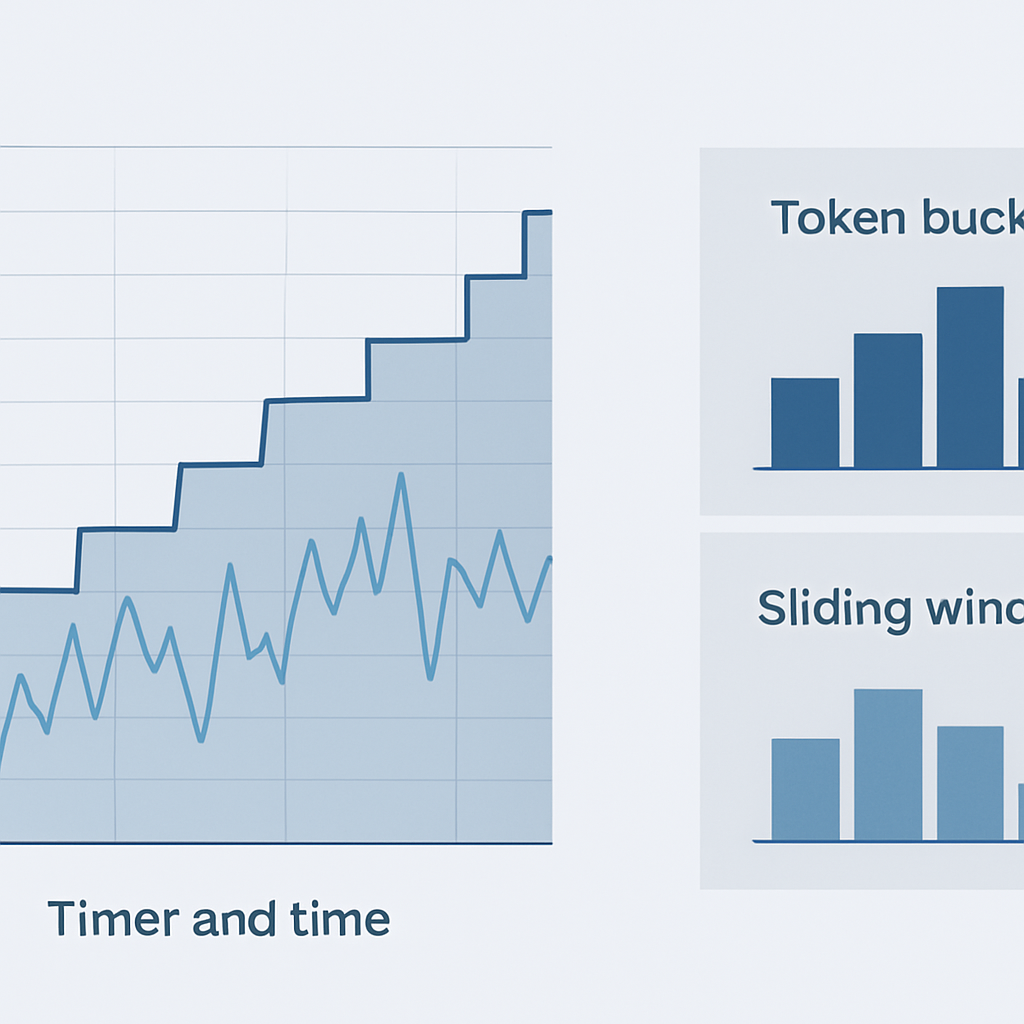
The Token Bucket algorithm is widely regarded for its simplicity and ability to handle burst traffic effectively. In this model, tokens are added to a bucket at a constant rate. Each incoming request consumes a token, and if the bucket is empty, the request is denied. This algorithm allows for a configurable burst capacity, making it ideal for scenarios where occasional spikes in traffic are expected.
- Efficiency: The Token Bucket algorithm provides a smooth and predictable rate limiting mechanism. It is efficient in scenarios where burst handling is critical.
- Implementation Complexity: With its straightforward logic, the Token Bucket is relatively simple to implement and maintain.
- Traffic Adaptability: The algorithm adapts well to varying traffic patterns, maintaining performance and reliability.
Sliding Window Algorithm
The Sliding Window algorithm, on the other hand, provides a more granular control over request limits by tracking requests over a sliding time window. This approach ensures a consistent request rate by averaging requests over time, making it suitable for applications that require strict adherence to rate limits.
- Efficiency: This algorithm ensures a steady request rate, which is beneficial for services that need to maintain consistent throughput.
- Implementation Complexity: The Sliding Window algorithm is more complex compared to the Token Bucket, as it involves maintaining a record of request timestamps.
- Traffic Adaptability: While it offers precise control, the Sliding Window can be less flexible in handling sudden surges in traffic compared to the Token Bucket.
Video Reference
For a visual explanation of related rate limiting algorithms, watch Rate Limit : Leaky Bucket Algorithm #distributedsystems by ByteMonk.
References
- Rate Limiting Strategies and Techniques - A detailed overview of various rate limiting strategies and how they can be applied.
- Implementing Rate Limiting in APIs - Insights into implementing rate limiting from a development perspective.
- API Rate Limiting Best Practices - Best practices for applying rate limits effectively in API environments.
Future Trends
As API usage continues to grow, the demand for more sophisticated rate limiting algorithms will increase. Future trends may include the integration of machine learning to predict and manage traffic patterns dynamically. Additionally, hybrid models that combine the strengths of both Token Bucket and Sliding Window approaches could emerge, offering more robust and adaptive rate limiting solutions. The evolution of cloud-native technologies will also play a significant role in enhancing the scalability and efficiency of these algorithms.
Verdict
In conclusion, both the Token Bucket and Sliding Window algorithms offer unique advantages and limitations. The choice between them should be based on the specific requirements of the API environment, such as the need for burst handling versus consistent rate enforcement. For developers seeking a more flexible approach with minimal implementation overhead, the Token Bucket is preferable. However, for scenarios demanding precise rate control, the Sliding Window is more suitable. As technology advances, the development of more adaptive and intelligent rate limiting solutions is anticipated, providing enhanced capabilities for managing API traffic efficiently.
For those interested in a practical application of these principles, consider exploring the JSON-based Investment Tracker for an innovative approach to data management and API interaction.