
Research: Carbon Footprint - Cloud vs On-Premise
Abstract
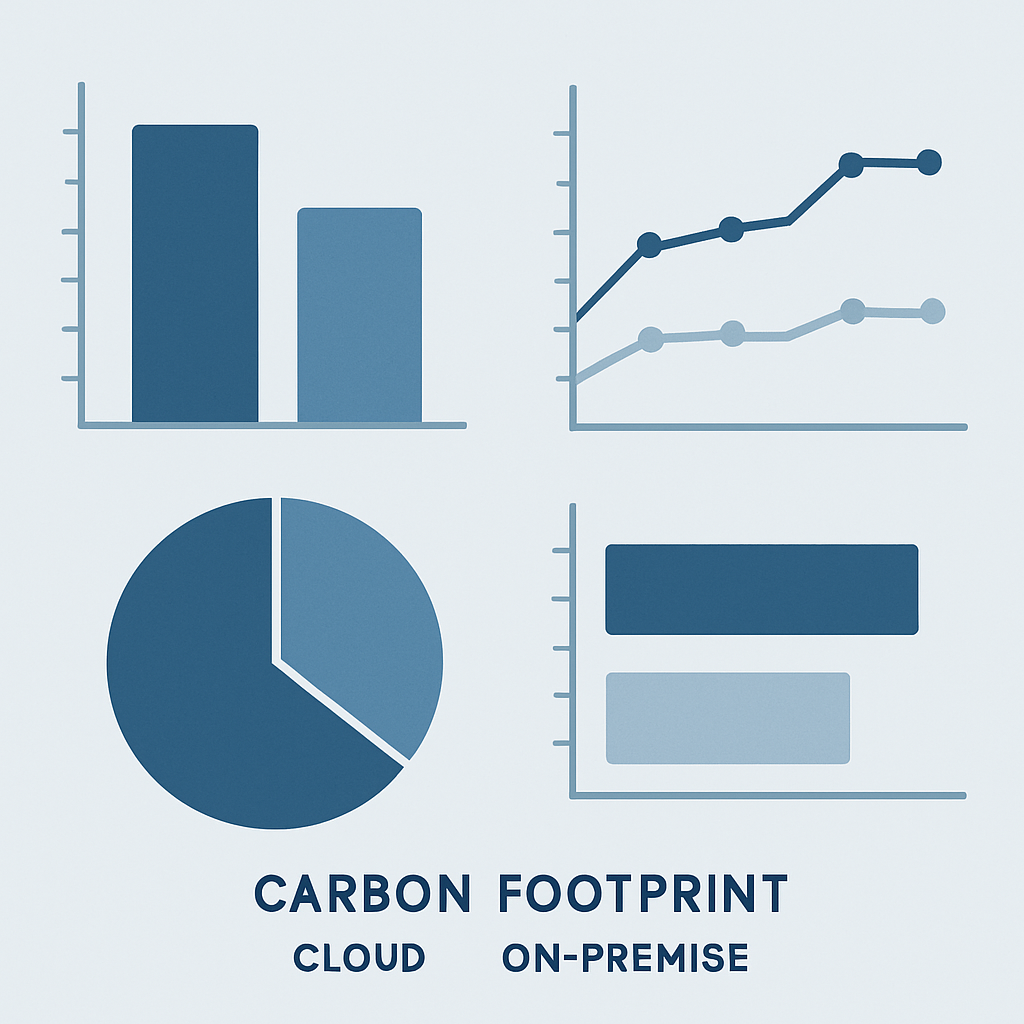
The environmental impact of IT infrastructure is a critical consideration for organizations aiming to reduce their carbon footprint. This research explores the energy consumption and subsequent carbon emissions associated with cloud-based and on-premise IT solutions. By analyzing various studies and data sources, we aim to provide a comprehensive comparison, highlighting the potential benefits of cloud computing in reducing carbon emissions.
Methodology
This research utilizes a comparative analysis approach to evaluate the carbon footprints of cloud versus on-premise IT infrastructures. Data was gathered from industry reports, scientific studies, and technical whitepapers focusing on energy consumption metrics and carbon emission outputs. The analysis includes factors such as energy efficiency, hardware utilization rates, and cooling requirements. Additionally, the research considers geographical energy grid differences and their impact on the overall carbon footprint.
Key Findings
-
Energy Efficiency: Cloud data centers are typically more energy-efficient than on-premise solutions due to economies of scale and advanced energy management technologies. Cloud providers often employ techniques such as dynamic provisioning, efficient cooling systems, and renewable energy sourcing, which contribute to a lower carbon footprint.
-
Carbon Emissions: The shift to cloud computing can result in significant reductions in carbon emissions. A study by Accenture found that cloud migrations can reduce carbon emissions by at least 59 percent compared to on-premise systems. This is primarily due to improved server utilization and reduced need for physical hardware.
-
Resource Utilization: Cloud environments offer enhanced resource utilization through virtualization and multi-tenancy. These technologies enable better workloads management, leading to reduced energy consumption per computational task.
-
Renewable Energy Adoption: Major cloud providers are investing heavily in renewable energy sources to power their data centers. Amazon Web Services (AWS), Microsoft Azure, and Google Cloud have committed to achieving net-zero carbon emissions and are integrating substantial amounts of wind and solar energy into their operations.
Video Reference
For more insights, refer to the session "AWS re:Invent 2022 - Scaling global carbon footprint management (STP213)" by AWS Events, which discusses strategies for managing and reducing carbon footprints in cloud environments.
References
- Accenture - The Green Behind the Cloud - This report discusses how cloud computing contributes to sustainability and carbon footprint reduction.
- Microsoft - Environmental Sustainability in the Cloud - An overview of Microsoft's efforts and strategies to minimize environmental impact through cloud technologies.
- AWS - Sustainability in the Cloud - AWS's commitment to sustainability and initiatives to reduce carbon emissions through cloud services.
Future Trends
Looking ahead, the trend towards more sustainable IT solutions is expected to continue, with cloud computing playing a pivotal role. Innovations in energy-efficient hardware, AI-driven optimization for data center operations, and increased reliance on renewable energy will further decrease the carbon footprint of cloud services. Additionally, regulatory pressures and corporate sustainability goals will drive more organizations towards cloud adoption as a means to achieve environmental targets.
Verdict
The comparison between cloud and on-premise infrastructures clearly indicates that cloud computing offers a more sustainable solution with a lower carbon footprint. As technology advances and the commitment to renewable energy grows, cloud-based solutions are set to become even more environmentally friendly. Organizations seeking to minimize their environmental impact should consider transitioning to cloud services as part of their sustainability strategies. For effective monitoring and management of investments in sustainable technologies, consider using a JSON-based Investment Tracker for streamlined data handling and analysis.