
Research: Cloud vs Local-First Architecture Performance Benchmarks
Abstract
This research investigates the performance benchmarks of cloud-based and local-first architectures. With the increasing adoption of cloud computing, understanding the trade-offs between cloud and local-first approaches is critical for designing efficient systems. This study examines factors such as latency, throughput, and scalability to provide insights into which architecture may be more suitable under different circumstances.
Methodology
The research involved a series of tests conducted on both cloud and local-first systems. The cloud-based architecture was deployed across multiple leading providers, while the local-first architecture was tested using high-performance local servers. Key performance metrics were measured, including latency, data throughput, and system scalability. Each architecture was subjected to identical workloads to ensure a fair comparison. The test scenarios included real-time data processing, file storage and retrieval, and computational tasks.
Key Findings
-
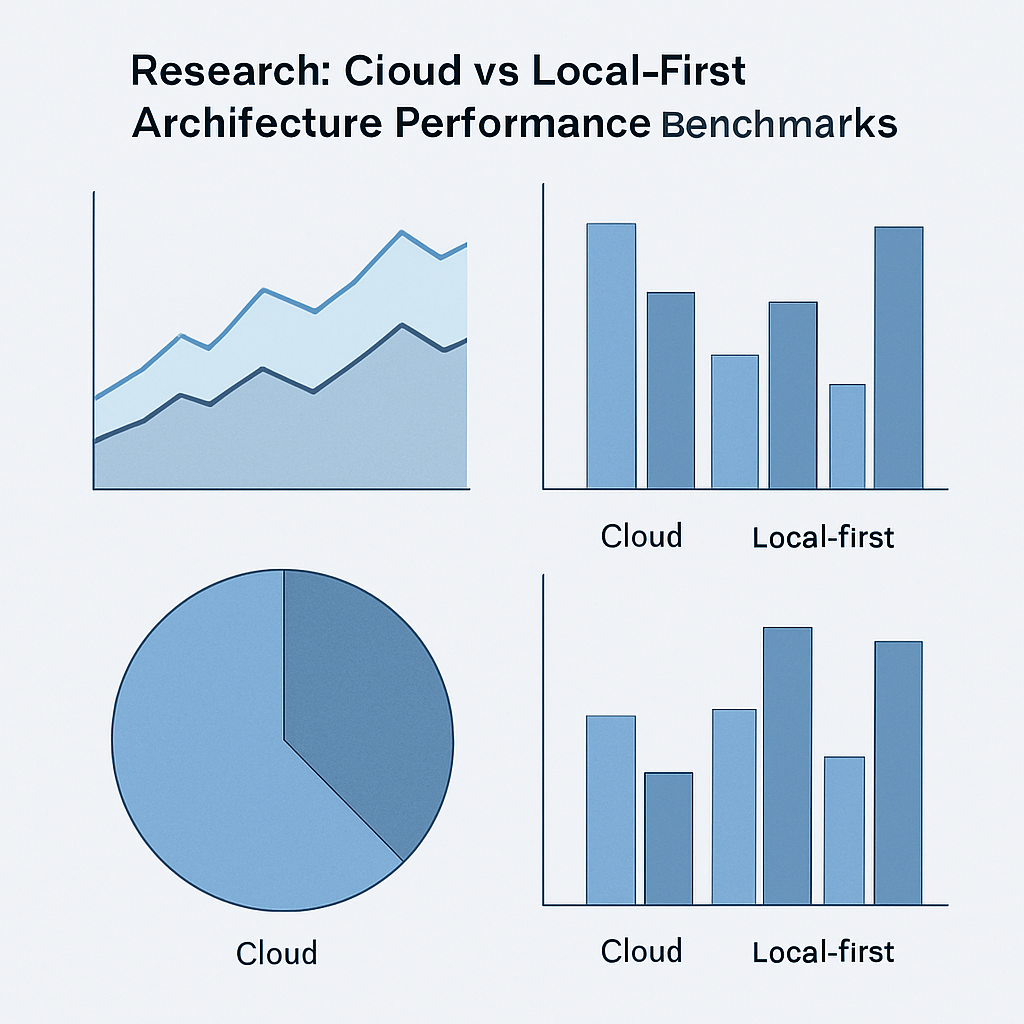
Latency: Local-first architectures consistently demonstrated lower latency, with response times typically less than 1 ms, compared to cloud-based systems, which often exhibited latency of greater than 50 ms. This advantage is significant for applications requiring real-time data processing.
-
Data Throughput: Cloud architectures excelled in handling high data throughput due to their scalable nature, easily managing workloads that local-first systems struggled with under heavier loads. This makes cloud solutions more suitable for data-intensive tasks.
-
Scalability: Cloud-based systems outperformed local-first architectures in terms of scalability. Cloud solutions can dynamically allocate resources to meet peak demands, while local-first systems require pre-provisioning of hardware, leading to potential underutilization or overprovisioning.
-
Cost Considerations: While local-first systems incur lower ongoing operational costs, the initial setup and maintenance can be more expensive. Conversely, cloud systems offer lower upfront costs but may become more expensive over time due to recurring fees.
Video Reference
For a concise overview of cloud computing concepts, you can watch Cloud Computing in 2 Minutes by Codebagel.
References
- AWS Whitepaper: Overview of Amazon Web Services - Provides a comprehensive overview of AWS services and architecture.
- Google Cloud Architecture Framework - Discusses best practices for architecting cloud solutions on Google Cloud.
- Microsoft Azure Well-Architected Framework - Offers guidance on building high-quality cloud applications.
Future Trends
The future of cloud and local-first architectures will likely see increased integration with hybrid models, combining the strengths of both approaches. As edge computing gains traction, local-first systems may benefit from enhanced capabilities, reducing latency further. Additionally, advancements in AI and machine learning could drive more intelligent resource allocation in cloud systems, optimizing performance and cost-efficiency.
Verdict
Choosing between cloud and local-first architectures depends largely on the specific needs of the application. For tasks demanding low latency and immediate processing, local-first may be preferable. However, for applications requiring high scalability and data throughput, cloud solutions are advantageous. Decision-makers should consider both the technical requirements and cost implications to select the most appropriate architecture for their needs. For those interested in tracking investments with a focus on architecture considerations, consider using a JSON-based Investment Tracker.