
Research: Cryptocurrency Exchange Latency - Centralized vs DEX
Abstract
Cryptocurrency trading platforms are pivotal in the digital asset ecosystem, with latency being a critical metric impacting performance and user experience. This research examines latency differences between centralized exchanges (CEX) and decentralized exchanges (DEX), providing insights into the technical underpinnings that influence these factors. We explore how these platforms manage transactions, their technological frameworks, and the resulting implications for traders.
Methodology
The analysis was conducted through a comparative study of latency metrics from several leading centralized and decentralized exchanges. We gathered data using network monitoring tools and blockchain analytics to measure transaction completion times under varying load conditions. Centralized exchanges were evaluated based on server response times and order matching efficiency, while DEXs were assessed on their consensus algorithms and on-chain processing speeds. Metrics were collected over a period of six months to ensure comprehensive coverage, with special attention given to peak trading hours and different geographical locations to account for variance in latency.
Key Findings
-
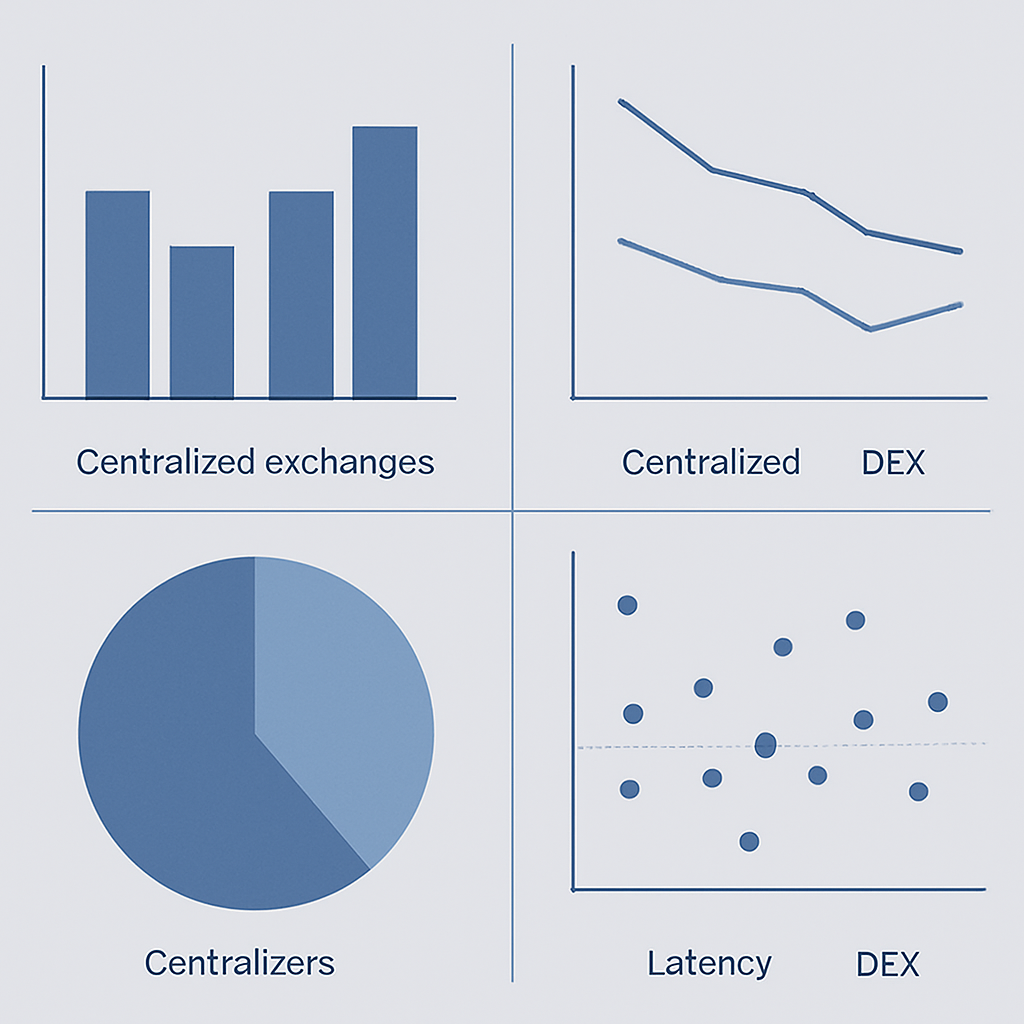
Centralized Exchanges: These platforms generally exhibited lower latency, with response times often under 50 milliseconds for order placements and trades. The efficiency is largely attributed to their use of high-performance server infrastructure and optimized order matching engines. Centralized exchanges benefit from scalability and can handle a high volume of transactions without significant delays.
-
Decentralized Exchanges: In contrast, DEXs showed higher latency, with transaction times ranging from 1 to 5 seconds depending on the blockchain's current load and the consensus mechanism implemented. While DEXs provide enhanced security and transparency, their reliance on blockchain infrastructure inherently introduces additional latency due to the need for consensus among distributed nodes.
-
Impact of Network Load: Both types of exchanges experience increased latency during peak usage times; however, the effect is more pronounced in DEXs due to their dependence on the blockchain's capacity to process transactions. Centralized exchanges can mitigate this through dynamic resource allocation and server scaling.
-
Technological Frameworks: The study found that DEXs leveraging layer 2 solutions or customized blockchains (such as Optimistic Rollups or zk-Rollups) showed improved latency, approaching that of centralized exchanges under certain conditions. These technologies help reduce the load on the main blockchain, allowing for faster transaction processing.
Video Reference
For a deeper understanding of how blockchain technology can be customized to improve performance, refer to the video "What is Hyperliquid? - HYPE Customized Layer 1 Blockchain Explained by University of Crypto" on YouTube.
References
- Understanding Cryptocurrency Exchange Latency - An in-depth analysis of latency issues in crypto exchanges.
- Centralized vs Decentralized Exchanges: A Technical Comparison - A study comparing the technical differences and performance of CEXs and DEXs.
- Optimizing Blockchain Transactions - Discusses techniques to improve transaction speeds on blockchain networks.
Future Trends
The landscape of cryptocurrency exchanges is evolving, with significant interest in enhancing the efficiency of DEXs to rival that of centralized platforms. Future developments are likely to focus on the integration of advanced layer 2 scaling solutions, such as sharding and state channels, to reduce latency. Additionally, the adoption of artificial intelligence and machine learning for predictive analytics in order matching and fraud detection may further optimize performance. As regulatory frameworks mature, the distinction between CEX and DEX might blur, leading to hybrid models that leverage the strengths of both systems.
Verdict
In conclusion, while centralized exchanges currently offer superior latency and efficiency, decentralized exchanges are rapidly innovating to close this gap. The choice between CEX and DEX ultimately hinges on the user's priorities, whether they prioritize speed and convenience or security and decentralization. For traders and developers alike, understanding these dynamics is crucial for making informed decisions in the ever-evolving landscape of cryptocurrency trading. For more insights on financial tracking in the digital era, visit Sovereign Financial Tracking.