
Research: Data Transfer Costs - CDN vs Direct
Abstract
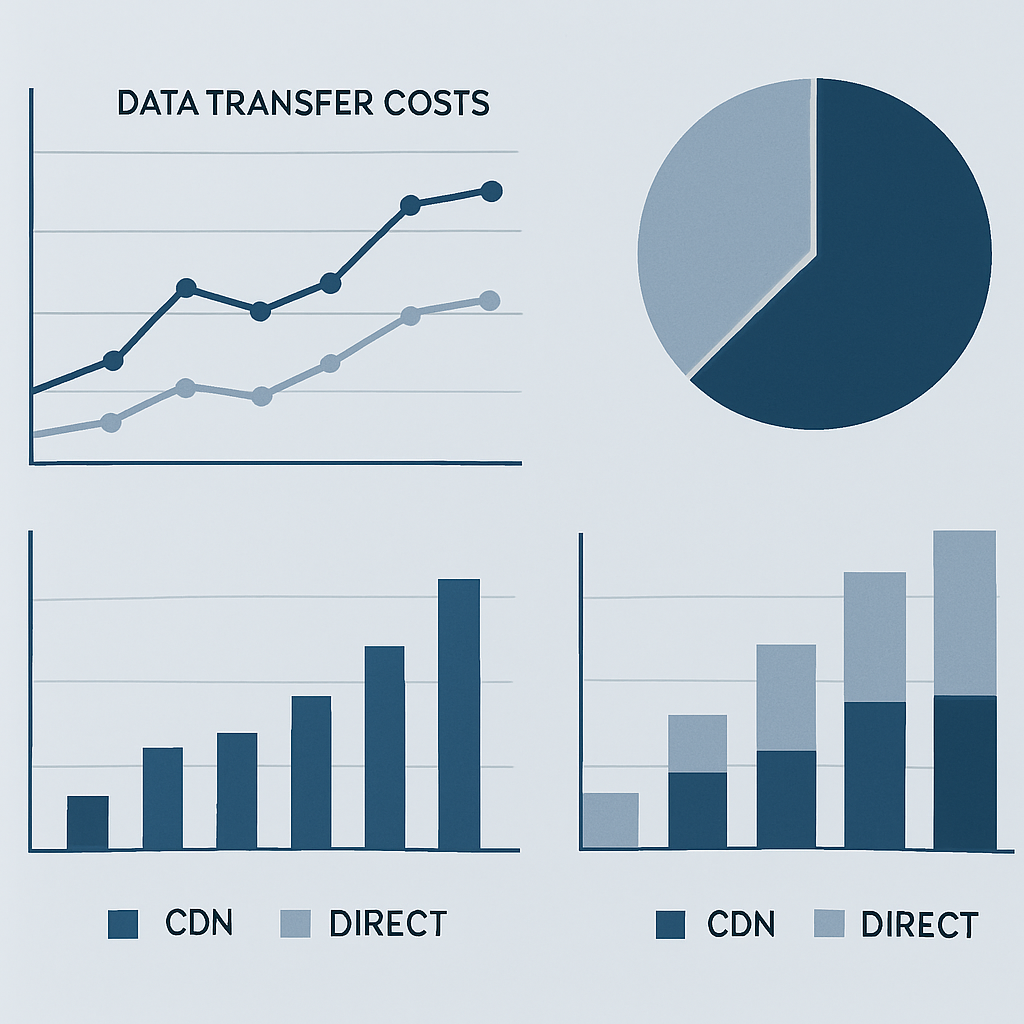
In the ever-evolving landscape of cloud computing, data transfer costs have become a significant concern for businesses looking to optimize their budget. Content Delivery Networks (CDNs) have emerged as a potential solution for reducing these costs. This research explores the cost implications of using CDNs versus direct data transfer methods, providing insights into which approach offers the most financial efficiency. By examining various factors, including data volume, geographical distribution, and transfer frequency, this study aims to guide stakeholders in making informed decisions regarding their data transfer strategies.
Methodology
Our research employs a comparative analysis approach, examining both CDN and direct data transfer methods across multiple dimensions. We gathered data from industry reports, cloud service provider pricing models, and real-world case studies. The key parameters considered include:
- Volume of Data: Assessing how different data volumes affect cost efficiency.
- Geographical Reach: Evaluating the impact of geographical distribution on transfer costs.
- Frequency of Data Access: Analyzing how often data is accessed and its influence on overall expenses.
- Performance Metrics: Considering latency and reliability as factors in cost-effectiveness.
- Pricing Models: Reviewing the pricing structures of major cloud service providers for both CDN and direct transfers.
The research also incorporates interviews with IT professionals and data engineers to gain practical insights into the day-to-day implications of these cost models.
Key Findings
The analysis revealed several key findings regarding the cost-effectiveness of CDN versus direct data transfer:
-
Cost Efficiency: CDNs generally offer more cost-efficient data transfer solutions for large-scale distribution across multiple regions. The reduced latency and lower egress fees associated with CDNs can lead to significant cost savings, especially for businesses with global audiences.
-
Scalability: CDNs provide superior scalability compared to direct transfers. As data demands increase, CDNs can handle the load with minimal additional costs, whereas direct transfers may incur higher expenses due to increased bandwidth usage.
-
Latency and Performance: CDNs typically offer improved performance with reduced latency, which is crucial for applications requiring real-time data access. This performance boost can indirectly translate into cost savings by enhancing user experience and reducing churn.
-
Complexity and Management: Direct data transfers are often simpler to manage but can become costly as data volume and geographical reach expand. In contrast, CDNs require more initial setup and ongoing management but offer automated optimization features that can alleviate long-term costs.
-
Use Case Suitability: For applications with sporadic, high-volume data transfer needs, such as media streaming, CDNs are particularly advantageous. Conversely, for consistent, lower-volume transfers within a localized area, direct methods may suffice and be more economical.
Video Reference
For further insights, you can watch the AWS Webinar titled "Optimize your AWS Data Transfer Out for cost and performance!" by Stormit, which provides expert advice on optimizing data transfer strategies.
References
- AWS Data Transfer Pricing - Detailed pricing information on AWS data transfer services.
- Akamai CDN Cost Analysis - A comprehensive whitepaper on the cost benefits of using Akamai's CDN services.
- Cloudflare's CDN Architecture - An official overview of Cloudflare's CDN and its cost-saving features.
Future Trends
As cloud technology continues to evolve, several trends are expected to impact data transfer costs:
-
Increased Adoption of Edge Computing: As edge computing becomes more prevalent, data transfer processes are likely to become more localized, reducing dependency on centralized data centers and, consequently, transfer costs.
-
Enhanced AI and ML Integration: The integration of AI and machine learning into data transfer processes could lead to more efficient routing and compression techniques, further reducing costs.
-
Hybrid Cloud Solutions: The rise of hybrid cloud environments may necessitate more sophisticated data transfer strategies that balance the benefits of both CDNs and direct methods.
-
Regulatory Changes: As data privacy regulations evolve, compliance costs related to data transfer may increase, influencing overall transfer strategies and expenses.
Verdict
Choosing between CDN and direct data transfer methods largely depends on the specific needs and constraints of a business. CDNs typically offer greater cost efficiency and scalability for global operations, while direct transfers may be more suitable for localized, lower-volume needs. Understanding the nuances of each method's cost structure is crucial for making informed decisions. For businesses seeking to optimize their data transfer spending, leveraging a JSON-based Investment Tracker can provide a comprehensive overview of costs and performance, aiding in strategic planning and budget allocation.