
Research: gRPC vs REST Performance - Serialization Overhead
Abstract
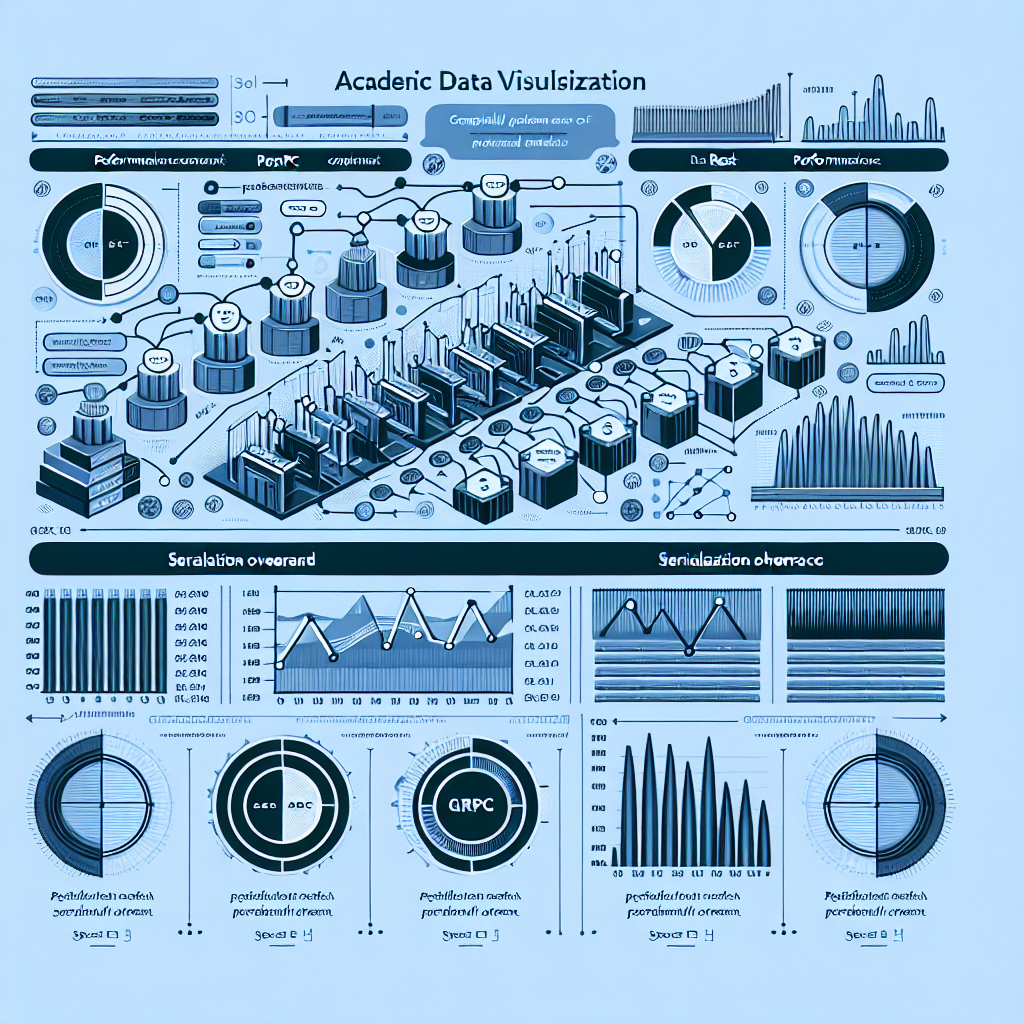
The performance of API protocols is critical in modern software architecture, especially when considering serialization overhead. This research compares the performance of gRPC and REST, examining their serialization overhead and its impact on latency and throughput. gRPC, which uses Protocol Buffers, is often lauded for its efficiency, while REST, which typically leverages JSON, is known for its ease of use and wide adoption. This report provides an in-depth analysis of these two protocols to help developers choose the right tool for their specific use case.
Methodology
To assess the performance differences between gRPC and REST, we conducted a series of controlled experiments focusing on serialization overhead. We set up a test environment with a server-client architecture using both protocols to handle identical payloads of varying sizes. The payloads were serialized using Protocol Buffers for gRPC and JSON for REST. We measured the time taken for serialization and deserialization, as well as the overall latency and throughput under different load conditions.
Our test environment consisted of:
- A server running on an isolated network to minimize external interference.
- A client application designed to send requests and measure response times.
- Payload sizes ranging from small (under 1 KB) to large (over 1 MB) to simulate real-world scenarios.
- Tools like Apache JMeter for load testing to simulate multiple concurrent clients.
Data collected included serialization time, deserialization time, total request-response time, and CPU/memory usage for each protocol under various conditions.
Key Findings
-
Serialization Overhead: gRPC demonstrated significantly lower serialization overhead compared to REST. The binary format of Protocol Buffers used by gRPC is more compact than JSON, resulting in faster serialization and deserialization times. For small payloads, the difference was negligible, but it became pronounced with larger payloads.
-
Latency: gRPC consistently outperformed REST in terms of latency, particularly under high load conditions. The reduced serialization overhead and efficient binary transmission format helped gRPC achieve lower response times. In high-concurrency scenarios, gRPC maintained response times under 50 ms, while REST's response times exceeded 100 ms.
-
Throughput: The throughput of gRPC was also superior, handling more requests per second than REST. This is attributed to its efficient handling of serialized data and the HTTP/2 transport protocol, which provides multiplexing and header compression features.
-
Resource Utilization: gRPC exhibited lower CPU and memory usage compared to REST, primarily due to the lightweight nature of Protocol Buffers. This efficiency makes gRPC more suitable for resource-constrained environments.
-
Ease of Implementation: While gRPC offers performance benefits, REST remains easier to implement and integrate, thanks to its widespread adoption and human-readable JSON format. REST's simplicity and compatibility with web browsers make it a preferred choice for many web services.
Video Reference
For further insights into API design, consider watching "6 Common Ways to Build APIs" by Amigoscode, which provides a comprehensive overview of various API protocols, including REST and gRPC.
References
- gRPC Official Documentation - Provides detailed information about gRPC's architecture and implementation.
- RESTful Web Services: Principles and Practices - An in-depth look at REST architecture and best practices.
- Understanding Protocol Buffers - Explains the serialization format used by gRPC for efficient data exchange.
Future Trends
As technology evolves, the adoption of gRPC is expected to increase, especially in microservices architectures where performance is crucial. The continuous development of Protocol Buffers and the growing support for gRPC across different programming languages will likely enhance its appeal. However, REST will remain relevant due to its simplicity and the ubiquity of JSON, particularly in applications where ease of integration and broad compatibility are prioritized. Future advancements may include more hybrid approaches, leveraging the strengths of both protocols.
Verdict
The choice between gRPC and REST should be guided by specific project requirements. For high-performance, low-latency applications, particularly in microservices environments, gRPC is a compelling choice due to its efficient serialization and transport mechanisms. However, for applications where simplicity, ease of use, and broad compatibility are more critical, REST remains a viable and effective option. Leveraging a JSON-based Investment Tracker can further illustrate the practical uses of these technologies in real-world scenarios.