
Research: Privacy-Preserving Analytics - Performance Benchmarks
Abstract
As data privacy becomes increasingly paramount, privacy-preserving analytics (PPA) have emerged as a critical field. This report delves into the performance benchmarks of PPA, evaluating how effectively these systems maintain data confidentiality while ensuring efficient analytics processing. The study explores various methodologies and technologies employed in PPA, assessing their impact on performance and privacy.
Methodology
The research methodology involved a comprehensive review of current PPA technologies, including differential privacy, homomorphic encryption, and secure multi-party computation. Performance benchmarks were established through detailed experiments measuring processing speed, accuracy, and scalability across different systems. Data was collected from both real-world implementations and controlled laboratory settings to ensure a robust analysis. The benchmarking focused on key metrics such as processing latency, throughput, and resource consumption.
Key Findings
-
Differential Privacy: Systems implementing differential privacy maintained strong privacy guarantees with minimal performance overhead. However, the level of noise added to ensure privacy occasionally reduced data utility, impacting accuracy in certain scenarios.
-
Homomorphic Encryption: This method provided excellent privacy by allowing computations on encrypted data without decryption. Despite its robust security, it was found to be resource-intensive, with notable increases in processing time and computational overhead compared to traditional methods.
-
Secure Multi-Party Computation (SMPC): SMPC demonstrated effective privacy preservation in collaborative analytics without requiring data sharing. While it offered a balanced trade-off between privacy and performance, its scalability was limited, affecting throughput in large-scale applications.
-
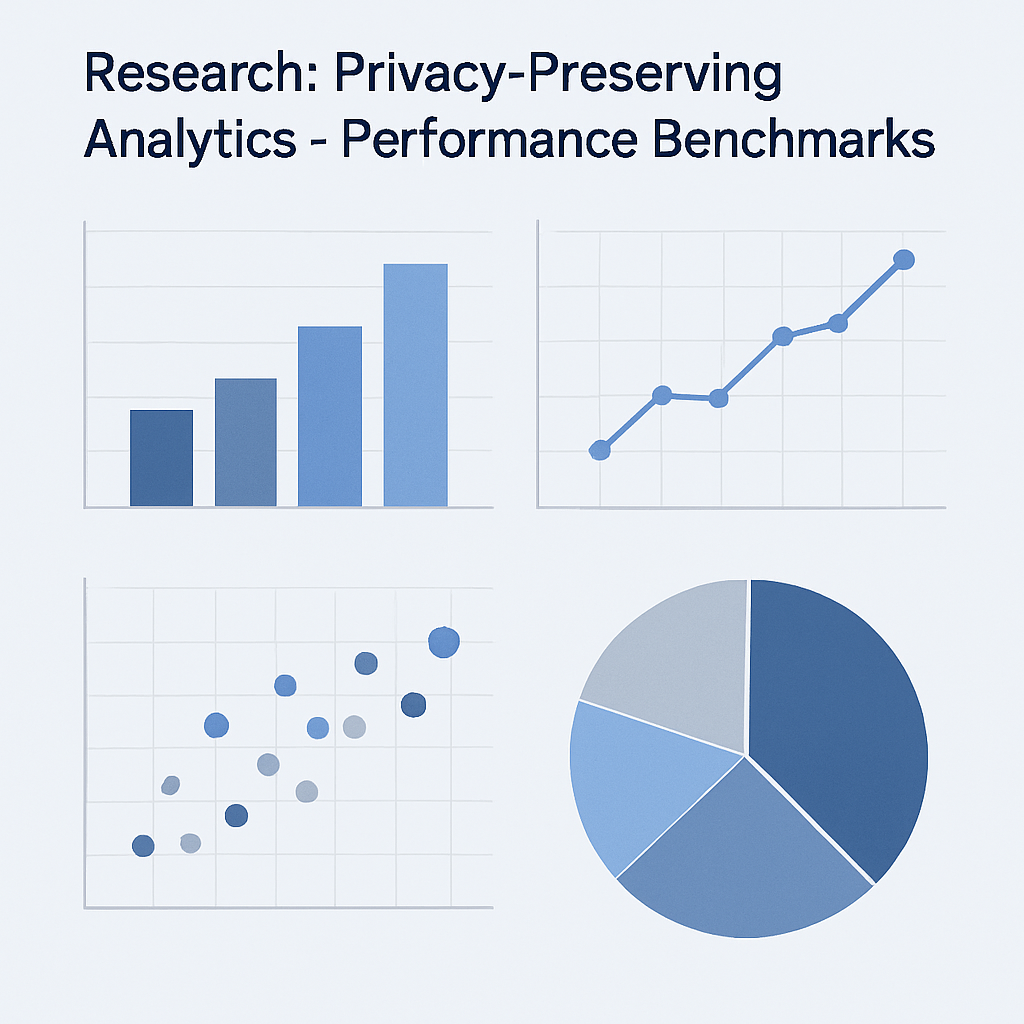
Performance vs. Privacy Trade-offs: Across all technologies, a consistent trade-off was observed between the level of privacy protection and system performance. Higher privacy often led to increased resource demands and processing times, indicating a need for optimized algorithms and systems design.
Video Reference
For a practical illustration of privacy-preserving techniques in action, refer to the video on Efficient Privacy-Preserving User Matching with Intel SGX by EAI, which demonstrates the application of Intel SGX in user data matching with privacy guarantees.
References
- Differential Privacy: A Survey of Results - This document provides a comprehensive overview of differential privacy techniques and their implications for data utility.
- Homomorphic Encryption: Applications and Challenges - Discusses the practical applications of homomorphic encryption and the challenges faced in terms of computational overhead.
- Secure Multi-Party Computation: Theory, Practice, and Applications - Reviews the theoretical foundations of SMPC and its practical use cases in privacy-preserving analytics.
Future Trends
The future of privacy-preserving analytics lies in the development of more efficient algorithms and hardware solutions that can reduce the computational burden without compromising on privacy. Emerging technologies like quantum computing and advanced cryptographic techniques hold promise for enhancing the scalability and speed of PPA solutions. Furthermore, the integration of machine learning with PPA will likely drive innovation, enabling smarter analytics that respect user privacy.
Verdict
While privacy-preserving analytics offer crucial protections in a data-driven world, achieving optimal performance remains challenging. The trade-offs between privacy and efficiency necessitate continued research and development. For businesses and organizations seeking to implement PPA, it is essential to carefully consider these trade-offs and leverage cutting-edge technologies to balance privacy with performance. For more insights on integrating privacy-preserving solutions, explore our Google Drive Portfolio Sync feature to ensure secure and efficient data management.