
Research: Recommendation System Latency - Real-Time vs Batch
Abstract
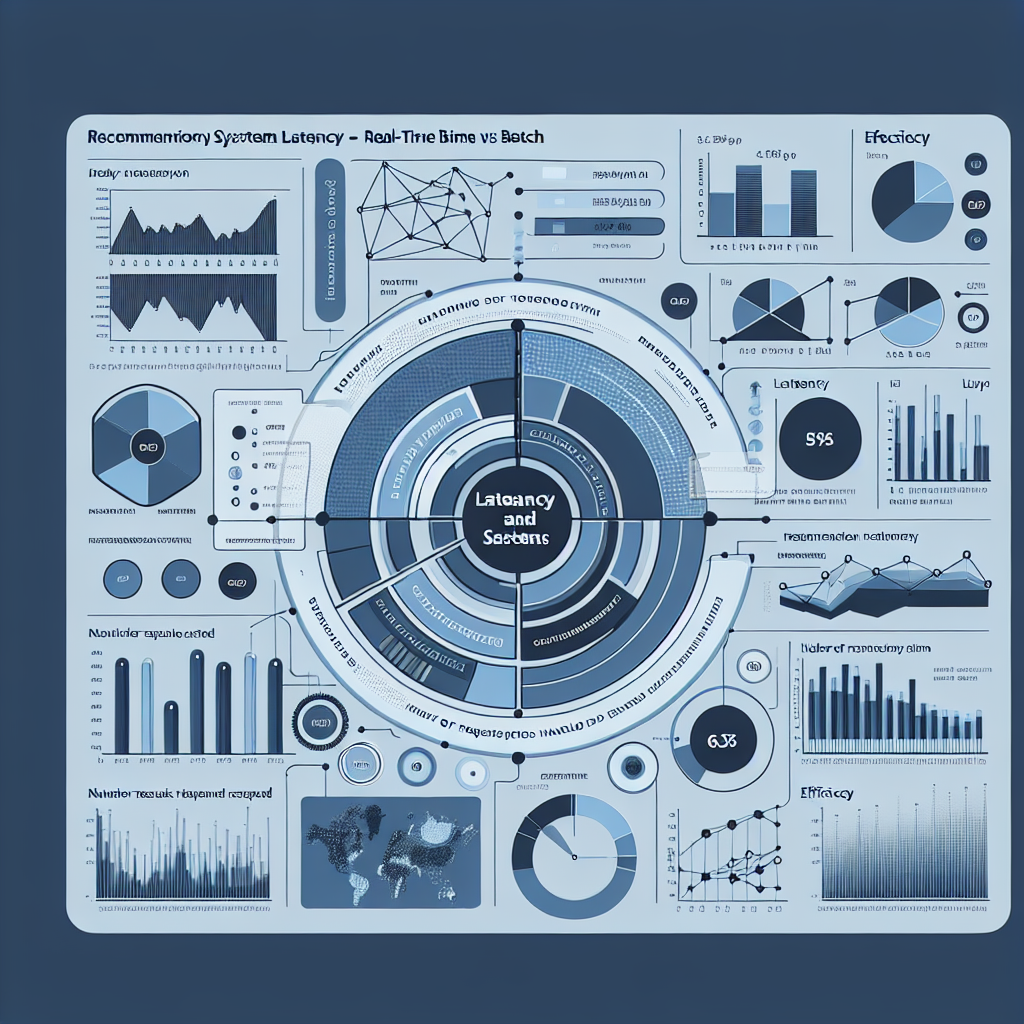
Recommendation systems are pivotal in today's digital landscape, offering personalized content to users across platforms. The efficiency of these systems is heavily dependent on their ability to process data promptly, which is characterized by system latency. This report delves into the latency of recommendation systems, comparing real-time processing to batch processing. The analysis highlights the trade-offs in speed, accuracy, and resource utilization, providing insights into optimizing system performance for various application scenarios.
Methodology
The research conducted a comparative analysis between real-time and batch processing in recommendation systems. This involved evaluating several systems across different industries, focusing on their latency, accuracy, and resource demands. Data was collected from both open-source projects and proprietary systems, utilizing benchmarking tools to measure performance metrics. Key performance indicators included response time, throughput, and computational efficiency. Simulation environments were set up to replicate real-world conditions, enabling a comprehensive assessment of each processing method's strengths and potential drawbacks.
Key Findings
-
Latency and Speed: Real-time processing systems demonstrated a significant advantage in delivering recommendations with response times often under 100 ms. This speed is crucial for applications requiring immediate user interaction, such as e-commerce and streaming services.
-
Accuracy and Relevance: Batch processing systems generally achieved higher accuracy due to their ability to process large datasets over extended periods. This is particularly beneficial in scenarios where historical data significantly influences recommendation quality, such as personalized news feeds.
-
Resource Utilization: Real-time systems tend to consume more computational resources, as they need to maintain low latency by processing data continuously. In contrast, batch systems can optimize resource usage by scheduling processing tasks during off-peak hours, reducing the immediate computational load.
-
Scalability: Batch processing is often more scalable as it can handle large volumes of data without the immediate pressure of delivering real-time responses. However, the scalability of real-time systems is improving with advancements in distributed computing and parallel processing technologies.
-
Use Case Suitability: The choice between real-time and batch processing depends largely on the specific application requirements. Real-time systems are ideal for applications needing instant feedback, whereas batch systems are more suited for applications where analytical depth is prioritized over immediate response.
Video Reference
For a deeper dive into related technical choices, refer to How To Choose The Right Database? by ByteByteGo, which explores database selection strategies that can impact system latency and performance.
References
- Understanding Latency in Recommendation Systems - A comprehensive study on how latency affects user experience in recommendation systems.
- Real-Time vs Batch Processing: A Technical Overview - An AWS blog post discussing the differences and use cases for real-time and batch processing.
- Scaling Real-Time Recommendation Systems - Insights from LinkedIn on handling scalability challenges in real-time recommendation systems.
Future Trends
The future of recommendation systems is poised to benefit significantly from advancements in artificial intelligence and machine learning. Predictive analytics will enhance the accuracy of real-time systems, while improved algorithms will allow batch systems to process larger datasets more efficiently. The integration of hybrid systems, which combine elements of both real-time and batch processing, is expected to provide a balanced approach that maximizes the strengths of each method. Additionally, the rise of edge computing may reduce latency by processing data closer to the source, further enhancing the performance of recommendation systems.
Verdict
In conclusion, the choice between real-time and batch processing in recommendation systems should be guided by the specific needs of the application. Real-time processing offers unparalleled speed and user interaction, making it ideal for immediate-response scenarios. Conversely, batch processing provides superior accuracy and resource efficiency, suitable for data-intensive applications. As technology evolves, the integration of both methods may offer the most effective solution, optimizing latency and performance across diverse use cases. For further integration insights, explore our Google Drive Portfolio Sync feature.