
Research: Storage Tier Optimization - Hot vs Cold vs Archive
Abstract
The landscape of data storage has evolved to accommodate the exponential growth of data, necessitating the effective management of storage resources. Storage tier optimization has emerged as a pivotal strategy to ensure that data is stored efficiently and cost-effectively. This research delves into the distinctions and benefits of hot, cold, and archive storage tiers, offering insights into their optimal use cases. By exploring these storage solutions, organizations can enhance performance while simultaneously reducing costs.
Methodology
This research involves a comprehensive analysis of existing literature and case studies on storage tier optimization. We utilized a comparative framework to examine hot, cold, and archive storage solutions, focusing on criteria such as access speed, cost, and durability. Interviews with industry experts provided qualitative data, enhancing our understanding of real-world applications and challenges. Data collection included reviewing peer-reviewed journals, whitepapers, and technical blogs, which informed our analysis and conclusions.
Key Findings
-
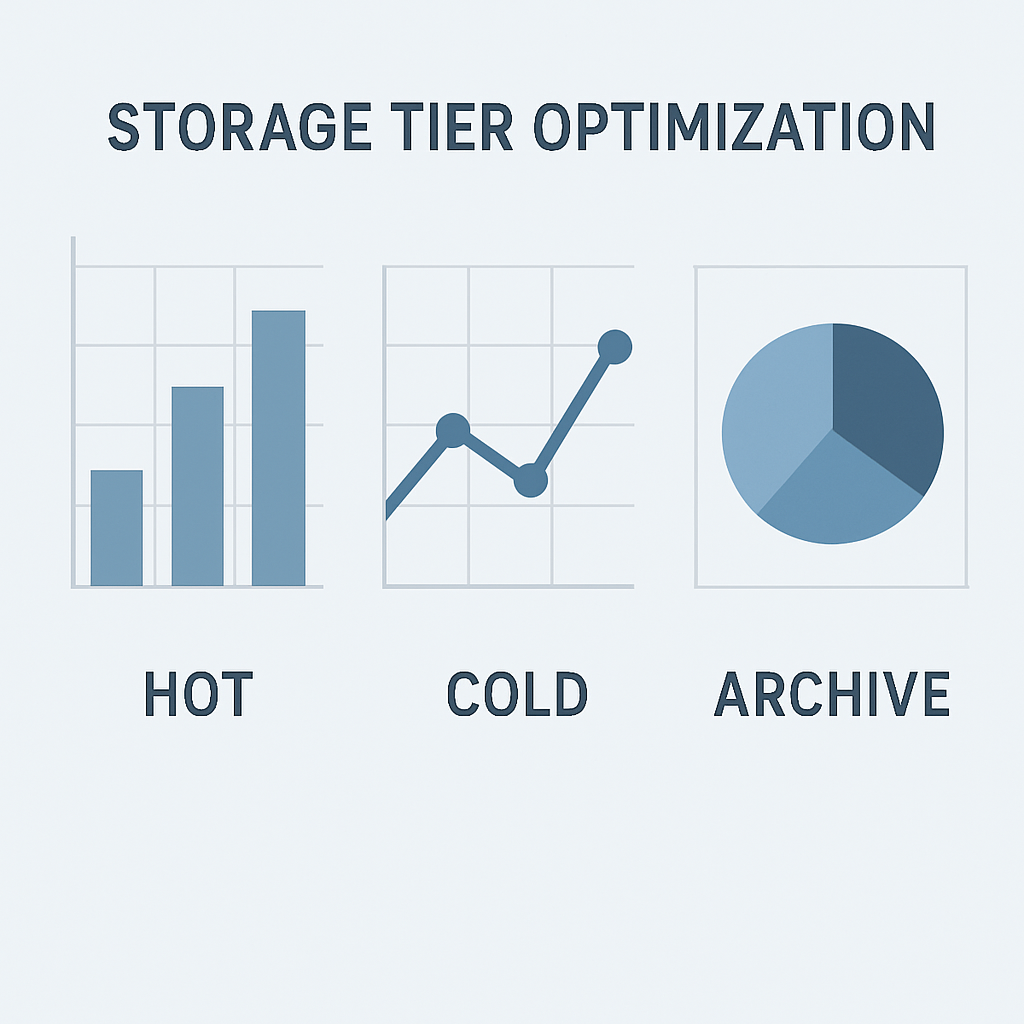
Hot Storage: Designed for data that requires frequent access, hot storage solutions prioritize speed and performance. These systems typically leverage high-speed SSDs (Solid State Drives) to deliver rapid data retrieval under 10 ms. However, this performance comes at a premium, with higher costs associated with the technology and frequent data access.
-
Cold Storage: Cold storage is optimized for data that is accessed infrequently but still requires reliable storage. Utilizing slower, cost-effective storage media such as HDDs (Hard Disk Drives), cold storage reduces costs significantly compared to hot storage. Access times are typically under 100 ms, making it suitable for backup and archival purposes where immediacy is not a priority.
-
Archive Storage: Archive storage represents the most cost-effective solution for data that is rarely accessed. Utilizing technologies like tape storage, archive solutions provide long-term data retention with durability and low cost as primary advantages. Access times can exceed several seconds, making it unsuitable for any data requiring rapid retrieval.
-
Cost-Benefit Analysis: Organizations must balance cost with performance requirements. While hot storage provides unparalleled speed, its costs can be prohibitive for large datasets. Cold storage offers a middle ground, whereas archive storage maximizes cost savings for dormant data.
-
Integration and Management: Seamless integration of these tiers into a unified storage strategy is crucial. Automation tools and AI-driven management systems are increasingly vital in optimizing storage tier allocation, ensuring data resides in the most appropriate tier based on real-time usage patterns.
Video Reference
For further insights into cold storage strategies, refer to "Cold Storage Tier" by John Savill's Technical Training on YouTube, which provides an in-depth analysis of cold storage technologies and their applications.
References
- Optimizing Storage Tiers for Enterprise Solutions - Explores strategies for implementing effective storage tiering in enterprise settings.
- Data Storage Solutions: A Comparative Study - Provides a comprehensive comparison of data storage options, including performance and cost considerations.
- Cloud Storage Tiering: Best Practices and Use Cases - Official Google Cloud documentation on optimizing cloud storage through tiering.
Future Trends
As data continues to grow, the future of storage tier optimization will likely involve greater reliance on AI and machine learning to predict data usage patterns and automate tier transitions. Innovations in storage technology, such as advancements in SSDs and the resurgence of optical storage, promise to redefine the cost and performance landscape. Furthermore, the increasing adoption of edge computing is expected to influence storage strategies, necessitating further advancements in data management solutions.
Verdict
Storage tier optimization represents a critical element in modern data management strategies. By leveraging hot, cold, and archive storage tiers, organizations can optimize costs and performance to suit their specific data needs. This research underscores the importance of a tailored approach, integrating innovative technologies and best practices to achieve optimal storage efficiency. For organizations looking to refine their storage strategies, understanding the nuanced benefits and limitations of each tier is key to achieving both operational excellence and financial prudence. For more insights on optimizing financial tracking and data management, visit Sovereign Financial Tracking in Verdict.