
Research: Time-Series Database Performance - InfluxDB vs TimescaleDB
Abstract
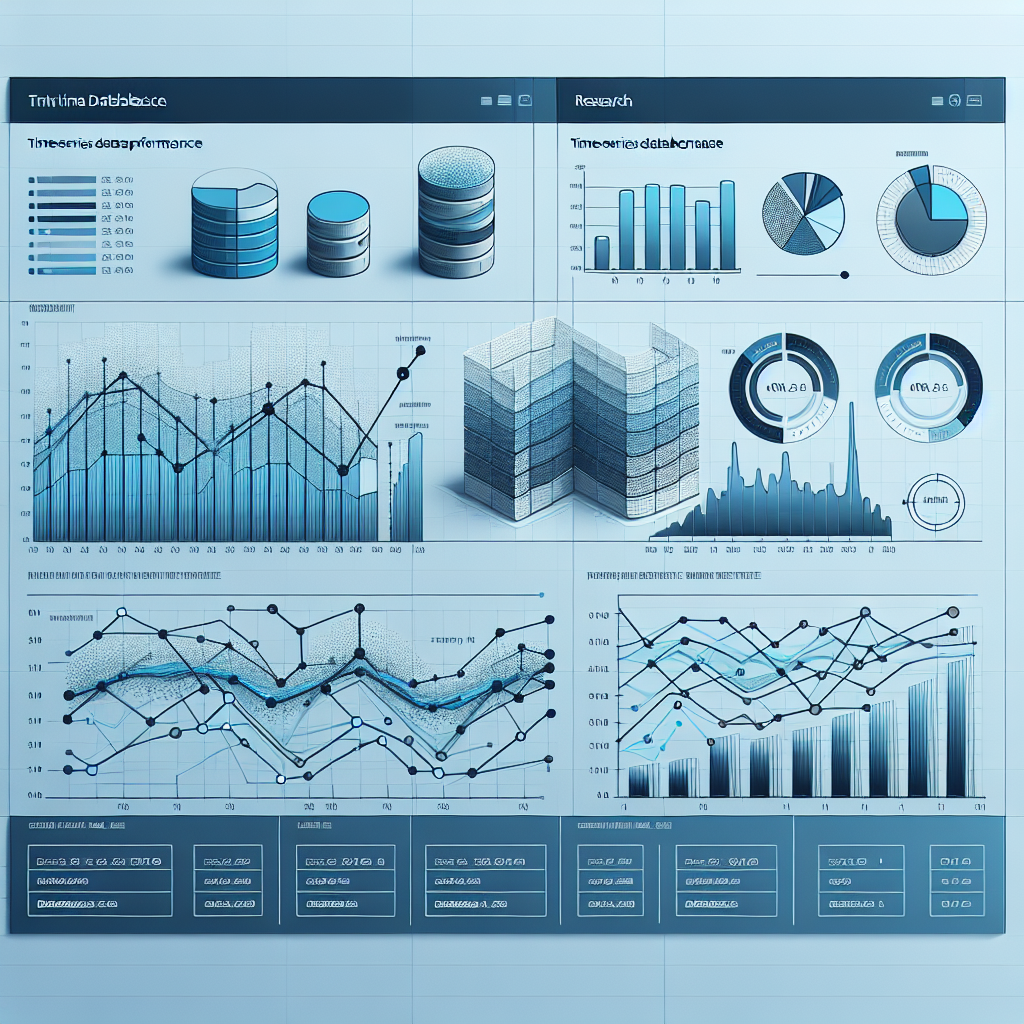
This research report delves into a comparative analysis of the performance metrics between two prominent time-series databases: InfluxDB and TimescaleDB. Time-series databases are crucial for efficiently handling data that is time-stamped or sequential in nature, a common requirement in various industries such as financial services, IoT, and monitoring systems. With the exponential growth of data volume and velocity, choosing the right database technology can significantly impact the scalability and responsiveness of applications dealing with time-series data. This study aims to provide insights into the performance characteristics of InfluxDB and TimescaleDB, focusing on query speed, data compression, scalability, and ease of use, to guide practitioners in selecting the most suitable time-series database for their needs.
Methodology
The methodology adopted for this research involved a series of benchmarks and real-world scenario testing to objectively compare InfluxDB and TimescaleDB. The benchmarks focused on several key performance indicators (KPIs) including write throughput, query speed, data storage efficiency, and scalability. Real-world scenarios were simulated to evaluate the databases under conditions mimicking production environments, such as high-velocity data ingestion and complex query patterns. The evaluation criteria were designed to measure not only the raw performance but also the ease of management and operational efficiency. The testing environment was standardized, with each database running on identical hardware and network configurations to ensure fairness in comparison.
Key Findings
-
Write Throughput: InfluxDB demonstrated higher write throughput compared to TimescaleDB in scenarios involving high-velocity data ingestion, benefiting from its optimized storage engine for time-series data.
-
Query Speed: TimescaleDB outperformed InfluxDB in complex query scenarios, particularly those involving JOIN operations and aggregations over large datasets, due to its advanced indexing and query planner.
-
Data Compression and Storage Efficiency: TimescaleDB exhibited superior data compression capabilities, leading to reduced storage requirements and associated costs. This advantage becomes more pronounced as data volume scales.
-
Scalability: Both databases showed robust scalability features; however, TimescaleDB provided more flexible scaling options, especially in distributed environments, due to its integration with PostgreSQL.
-
Ease of Use: For users already familiar with SQL, TimescaleDB offered a smoother learning curve and integration experience since it extends PostgreSQL. InfluxDB, while highly optimized for time-series data, has a domain-specific query language, which might require additional learning.
Video Reference
For those interested in exploring the basics of time-series data and InfluxDB further, the video "InfluxDB: The Basics of Time Series Data" by InfluxData provides an excellent introduction. This resource is particularly useful for understanding the core principles of time-series databases and their importance in modern data architecture.
References
-
InfluxDB vs. TimescaleDB: The Time Series Database Battle - A comprehensive comparison by InfluxData, offering insights into the performance and features of both databases.
-
TimescaleDB Documentation - The official TimescaleDB documentation, providing detailed information on installation, configuration, and optimization.
-
Benchmarking Time-Series Databases - A guide by Timescale on how to effectively benchmark time-series databases, including considerations and techniques.
Future Trends
The time-series database market is rapidly evolving, with significant innovations focused on enhancing performance, scalability, and ease of use. Machine learning integration for predictive analysis, automated data lifecycle management, and the adoption of cloud-native architectures are among the key trends expected to shape the future of time-series databases. Both InfluxDB and TimescaleDB are actively developing features to address these trends, including improved analytics capabilities and more efficient data storage mechanisms. The ongoing research and development in this space suggest that time-series databases will continue to become more powerful, versatile, and easier to integrate into a wide range of applications.
Verdict
Choosing between InfluxDB and TimescaleDB for time-series data management depends largely on specific project requirements and existing technical infrastructure. InfluxDB offers superior performance for write-heavy workloads and is particularly well-suited for IoT and real-time analytics applications. On the other hand, TimescaleDB excels in scenarios requiring complex queries and joins, making it ideal for users seeking to leverage SQL capabilities alongside time-series data features. With the future of time-series databases looking promising, organizations should consider not only current performance benchmarks but also strategic compatibility with emerging trends and technologies. For teams looking to enhance their decision-making process with real-time data analysis and management, integrating with platforms like Google Drive Portfolio Sync can streamline workflow and data accessibility, complementing the strengths of both InfluxDB and TimescaleDB.