
Understanding API Load Balancing
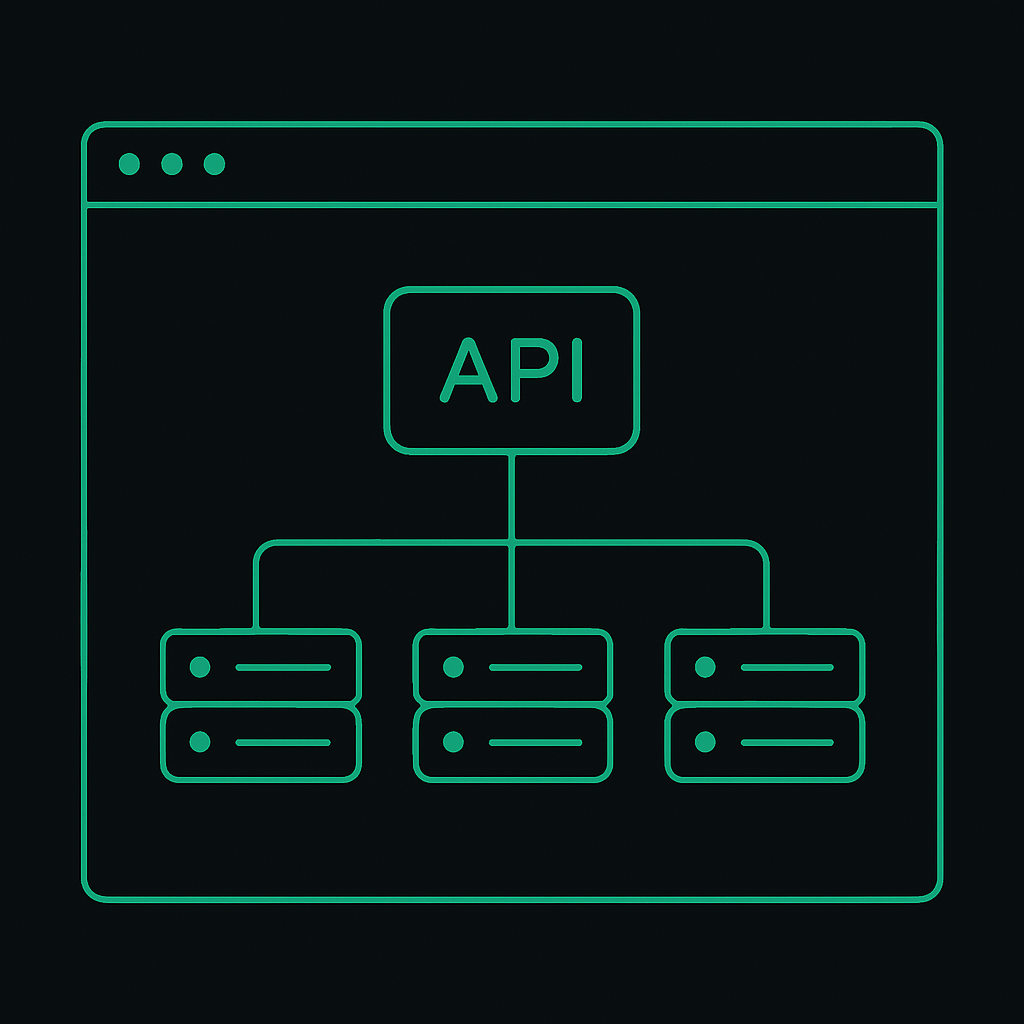
Problem
APIs are the backbone of modern web applications, enabling communication between different services. As your application scales, the APIs serving numerous clients concurrently can become a bottleneck. If an API server becomes overloaded, it can lead to increased response times and even downtime, affecting user experience and system reliability.
Solution with Code
To address this, API load balancing is implemented to distribute client requests across multiple servers effectively. This ensures that no single server becomes overwhelmed, improving application performance and reliability. Below is a basic setup using Nginx to load balance API requests.
Nginx Configuration for API Load Balancing:
http {
    upstream api_backend {
        server api-server1.example.com;
        server api-server2.example.com;
        server api-server3.example.com;
    }

    server {
        listen 80;

        location /api/ {
            proxy_pass http://api_backend;
            proxy_set_header Host $host;
            proxy_set_header X-Real-IP $remote_addr;
            proxy_set_header X-Forwarded-For $proxy_add_x_forwarded_for;
            proxy_set_header X-Forwarded-Proto $scheme;
        }
    }
}
-
Define an Upstream Block: This block lists the servers that will handle the API requests (
api-server1,api-server2,api-server3). Nginx will distribute requests among these servers. -
Configure a Server Block: The server block listens on port 80 and proxies all requests that match the
/api/path to the upstream block. -
Set Headers: Proper headers are set to preserve client information and ensure proper routing.
Key Concepts
-
Load Balancer: A load balancer is a critical component that distributes incoming network traffic across multiple servers. In the case of APIs, this ensures that no single server is overwhelmed, providing high availability and reliability.
-
Round Robin: This is the default load balancing method used by Nginx, where each server is selected in turn. It is simple and works well when all servers have similar capabilities.
-
Sticky Sessions: Also known as session persistence, this ensures that requests from the same client are always directed to the same server. This is crucial for applications that store session data locally on the server.
-
Health Checks: Regularly monitor the health of each server to ensure that traffic is not sent to a server that is down or underperforming. Nginx Plus, the commercial version of Nginx, provides built-in health checks.
Understanding and implementing API load balancing is crucial for maintaining performance and reliability as your application scales. By distributing requests efficiently, you can ensure a seamless experience for your users.